What I Read In November

A new month, and a new stack to share.

…if you ever want to see past stacks, or want to get any of the books head to THIS link.

This is a first for me, because I was struggling on what to blog about this week, I’m doing my monthly stack 2 days before the month closes…which is dangerous for me. I read all the way up until the clock strikes midnight on the month (not actually midnight, more like 10pm). But, I’m going to share the stack as it is so far, along with two books that I’m fairly certain will be done and dusted by the 1st.
November is when I learned that library is my happy place

The first thing you will notice about this month is I FINALLY got a library card, and I leaned on audiobooks a lot more than past months.

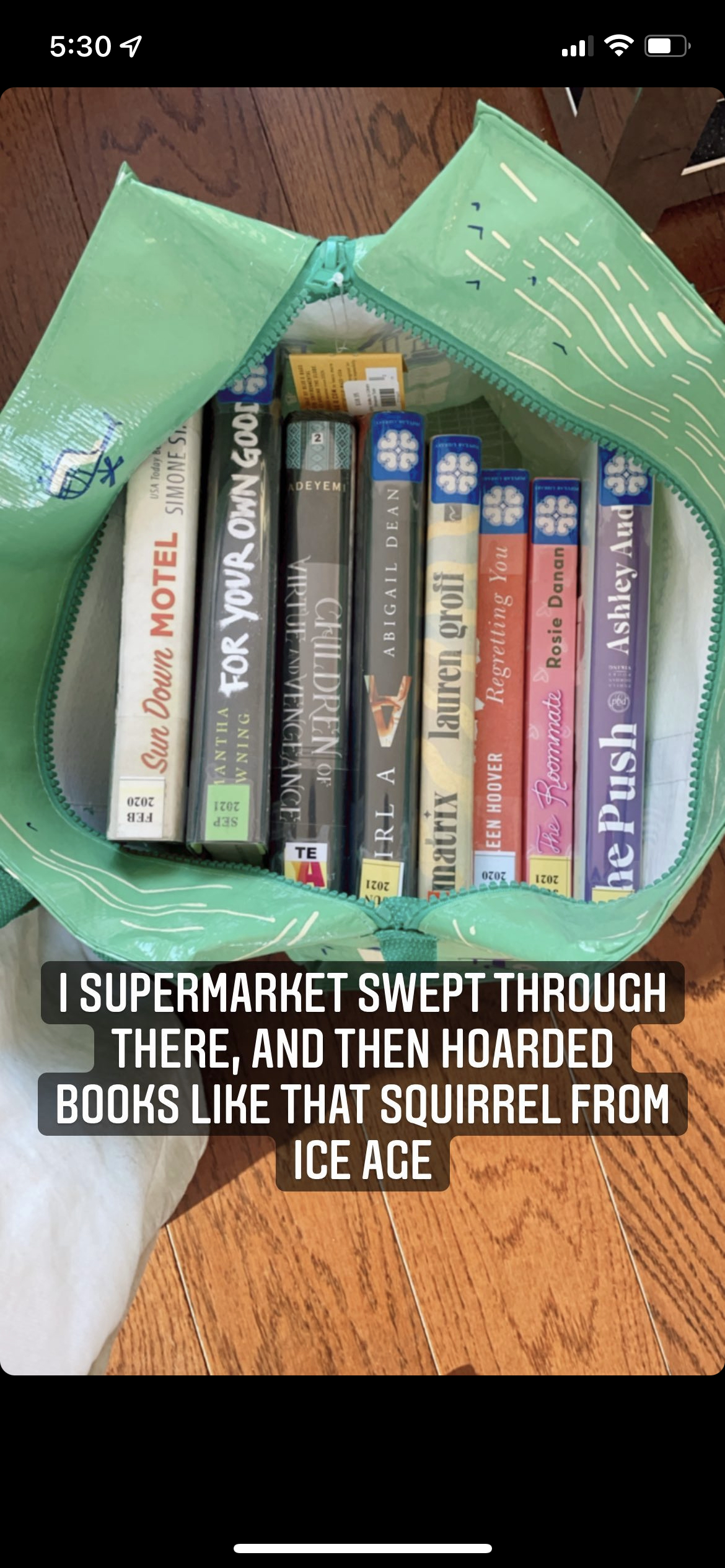
Side tangent, I haven’t had a library card since I was in middle school. I was still so controlled by my limiting beliefs when it came to reading that I never read any of the books I took out, and got a bunch of late fees on books I barely liked. Which for a terrified dyslexic is like a financial punishment for being a shit reader. So now ya girl has better reading habits and finally feels like she has a handle on this whole library life. I was so hype when I got to the library the first time that I basically did a supermarket sweep, grabbed 10 books, and was met with a lot of incredulous looks that I would get through everything.

Ok, back to the main event.

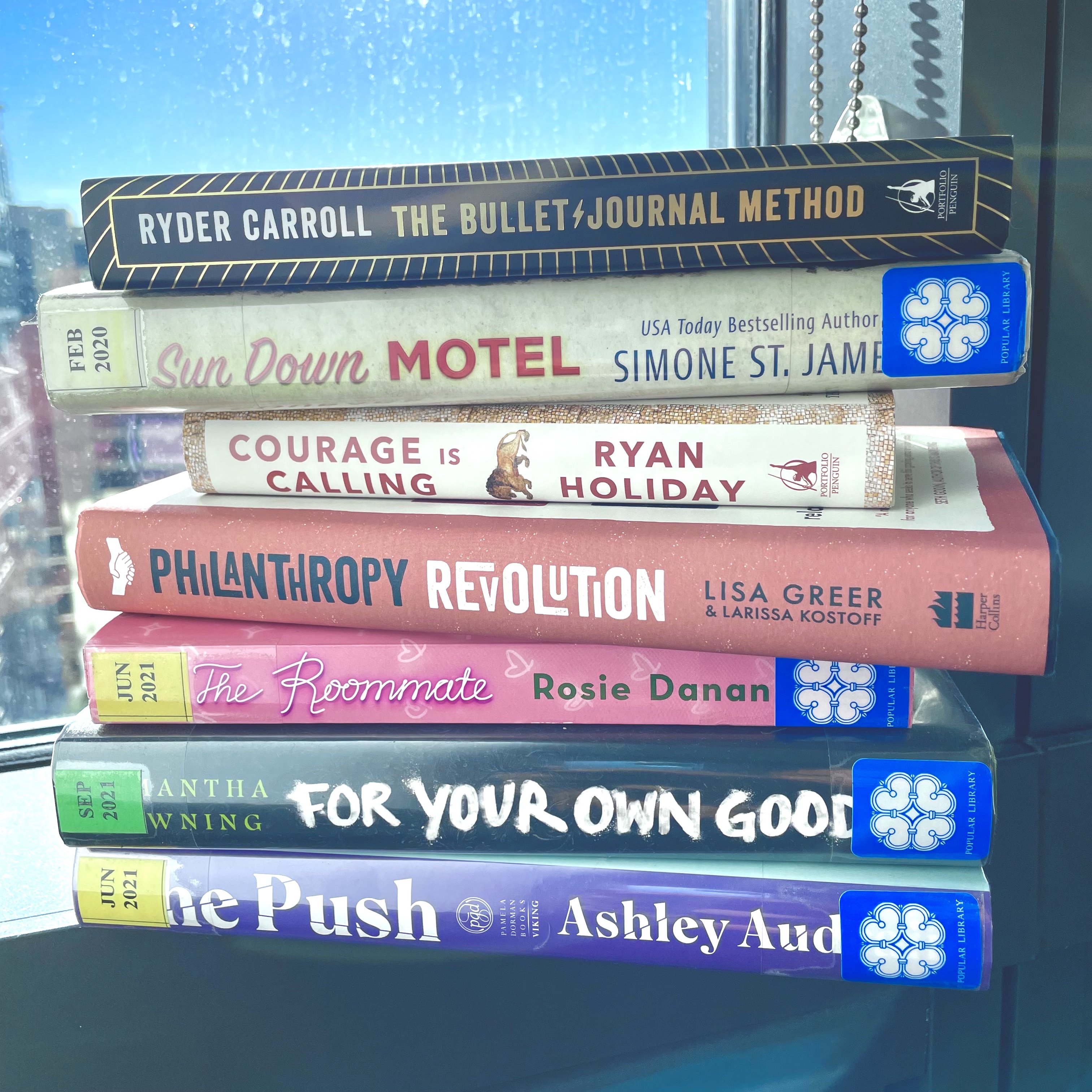
In November I read 9 books (11 if you count the 2 that I’m going to finish before EOM), 2 Did Not Starts, and 1 DNF.
What I read in November (warning: some spoilers below):

This is Not the Jess Show by Anna Carey (audiobook):

Loved the nostalgia of the 90s mixed with the nods to the future. I’m a fan of The Truman Show, so it was cool to see a YA version of it. Not an original premise but I thought it was a unique new take. Also it did a why better job with this premise than The Followers, which was a DNF for me.

If you enjoy YA, or The Truman Show, or The Followers, or need an easy read slump buster, this is the book for you.

I wish they would have taken a page from the Truman Show and drawn out the world more. I was shocked by how quickly the author broke it all open. I thought we were going to spend more time in the production world, and give Jess more space to be skeptical about what was happening around her. It felt like immediately she knew something was off, but I didn’t get the sense through any character development that she was that observant. It could have been like The Shimmering State, a believable future with an undefined year, with just a touch of current times that the reader can believe it’s in the not so distant future.

Philanthropy Revolution by Lisa Greer

This book felt more like a memoir of someone who joined the 1% than a not-for-profit strategy book.

The book was a little tone deaf at times strictly focusing on the impersonal ways 1%-ers are approached, but neglected to speak to the percentage of income donated stateitic, that showed $50k below donate 4% of their income compared to the 2.4%-2.6% of $100k-$1M. I would have loved to see ideas of the book applied to different income levels, career levels, demographics, etc. I also found the data on how the generations donate to be a little reductive, because if we acknowledged the wealth disparity between generations we’d have a more complete picture on what they’re donating.

It was helpful to learn about EDGAR for researching potential donors and DAF options for donations.

The book didn’t feel very tactical, but was a decent entry into learning about the conversations donors have around what they expect from an NGO.

This is a good book for anyone looking to learn more about the 1% or kick off new ideas about fundraising. I serve on a lot of NGO boards and this was an excellent kickoff to learning more about the fundraising world.

For Your Own Good by Samantha Downing

I was surprised by how much I enjoyed this thriller, even when the book got boring, I still wanted to stick with it to see how they were going to untangle all of the murders.

The author gives away the culprit at the top, we know Teddy Crutcher behind it, but in the vain of something like Dexter, from the killers perspective, we follow that individual throughout the book. There was a pretty solid red herring. I assumed because we were even meeting the character, that they’d prove integral to the plot, but even with the obvious connection the pay off was worth it in the end.

I would watch this as a movie because it made for an engaging story, but if a sequel to this book came out I’d skip it, cause I didn’t care about any of the characters beyond this story.

This book is good if you enjoy academia, high school drama/rich teens, thrillers, Samantha Downing, this is probably a book you’d enjoy. This gave me One of Us Is Lying Vibes, also Big Little Lies because of the rich families hiding secrets vibes.

The Roommate by Rosie Danan

This was an enjoyable read with a wonderful HEA.

I was impressed by the fact that this book is wildly sex positive, centers female pleasure, and tries to humanize sex work in a whimsical way. No one is trying to escape sex work, but rather make it safer, and destigmatize the adult industry. I also loved LA as the backdrop, and that the characters talked through their baggage and fears.

I was surprised by the lack of diversity in this book. There’s only one character of color, even though the author makes a big point of mentioning how Josh, Naomi, and Clara want to show a range of bodies and ethnicities in the porn industry.

It was smart on the spice scale to make one of the characters an adult entertainer, because it allowed someone to provide the dirty talk that made sense, after making Clara and everyone in her orbit out to be massive prudes.

If I never hear another miscommunication trope I’ll be a happy woman, and Clara being perfect virgin adjacent still felt like it was perpetuating this idea of purity making her desirable over Naomi it was a little ick!

I liked the characters enough that I want to read Naomi’s book.This reminded me of the book version of Zach and Miri make a porno, even down to the ending. Kiss Quotient, for the sex work factor and steam.

The Days of Afrekete by Asali Solomon (audiobook)

This is one of those books I would say is significantly above my intelligence level. This book is smart and quick, there’s something beautifully tragic about Liselle because she seems constantly moved around by others that move through her life. I don’t understand how she is with Winn, and it doesn’t seem like she is either.

There were some stand out quotes that I really liked:

“She knew how girls were she knew that in spending the weekend with Selena she might have inadvertently put a down payment on a future she was not ready to ante up.”

“…partial Indian blood…better than being all Black”

“Crazy…what you call a girl when you’re done with her”

“…to make plans with people that had just stepped off planes and trains was a sad second hand way to live” (Liselle felt like she was living a second half life to me throughout the book)

The way time is used was a little confusing but still effective. There also weren’t any wasted words in this book. A lot of fiction I’ve been reading has superfluous words, this book is written with intention.

This book was good, but I think it was so far outside of my comfort zone that I struggled to enjoy it…however I can acknowledge that it’s really brilliant writing that others should definitely read.

The book is inspired by Virginia Woolf’s Mrs. Dalloway, Toni Morrison’s Sula, and Audre Lorde’s Zami. The story of Liselle reminds me a lot of DeBlasio’s wife too.

The Push by Ashley Audrain

Blythe (the mother) reminded me of the main character in Luster for her insane choices, the stalker nature gave me You vibes, and I’d also say Bad Seed. I’ve also heard others say it reminds them of a book called There’s Something About Kevin.

This book was fine.

Honestly I thought the storyline about Blythe’s mom was unnecessary, it didn’t really help me understand Blythe better, or add to the story about Blythe and Violet. I didn’t get context that made their actions as mother and daughter make sense. The only pay off that had was with the neighbor that felt like a mother to Blythe being revealed in the end to still be part of her life.

I wish there had been more done with Violet. I would have loved for the story to have gone full Michael Meyers origin story and showed us how twisted and dark this child was, and how she was pulling her mother’s mental health down while tricking Fox. It felt like the author wanted to write a dark book, but stopped herself from really going there. Because there was so much there for her as a child, and for other people besides the night nurse to allude to her having this darkness inside of her.

Blythe was so hysterical that is was almost comical in a Sarah Paulson in AHS later seasons kind of way. She was also the most infuriating character for the choices she made. And Gemma felt very one dimensional to me.

This was described as a quick read, but I think the characters were such throw aways for me that it took me over a week to finish cause it was just fine.

Someone described this book as literary, but it felt lazy at times.

Courage Is Calling: Fortune Favors the Brave by Ryan Holiday

There isn’t a book that Ryan Holiday writes that doesn’t blow me away and impact me greatly.

It completely changed the way I thought about courage, particularly with everything happening to Black lives, I wonder if my dreams to be a change-maker are frivolous and even allowed for someone like me.

I want to be a leader, and this book made me so incredibly emotional because it felt like confirmation that I was called to be a leader in my field.

There honestly isn’t a Ryan Holiday book that doesn’t leave an impression on me!

The stoic heals themselves by focusing on what they can control: Their response. The repairing. The learning of the lessons. Preparing for the future. Making a difference for others. Requesting help. Changing. Sacrificing for a greater good.Ryan Holiday

The Sun Down Motel by Simone St. James

This book was doing too damn much!

Even when I was writing the synopsis in my Notion notes, I was exhausted by how much shit was happening. It was twisty, and kept my attention. There was just too damn much happening in this book.

This could have been good, but St. James clearly decided to throw it all in there.

I was entertained, but grateful I didn’t buy this and got it from the library instead.

This is a good book for someone that likes ghost stories, woman taking back the narrative, murder mysteries, and pop lit.

The Bullet Journal Method by Ryder Carroll

I will save this for a later post, but I was drawn to bullet journaling when I learned it’s a great system for neurodivergent folks, then I came across Ryder’s interview on The Daily Stoic Podcast and I was sold. So I’m legit just getting started on the method, but once I have 3 months under my belt, I will share everything I’ve learned, my takeaways from the book, and all the resources that led me to try it out.

Here are the last two books I expect to finish this month:

The Intimacy Experiment by Rosie Danan

The Favorite Sister by Jessica Knoll (audiobook)

Now if you’ve made it this far, here are a couple YouTube Videos you might like, related to this post:

A tour of my local branch

How to Read 100 Books In a Year While Watching A Lot of TV

My Storygraph account informed me recently that I’d hit 100 books. And because I’m a skeptical person (and overly committed to book data), I checked my GoodReads account to confirm that “yes” I had in fact passed 100 books.

No, I don’t know why my storygraph and good reads can’t agree how many books I read.

When you read a lot, as I apparently do, people have a few assumptions: you must not have much screen time, you must read super fast, and you can’t possibly retain everything you read.

First, I watch a crap ton of TV, YouTube, and movies. I’ve been known to get sucked down a Marvel Tik Tok hole. I veg out after work on the couch watching YouTube videos, and have to be up to date on all things Housewives. So don’t think I’m an intellectual who abhors screen time.

Second, I’m not the fastest reader. Growing up dyslexic, I used to sob when I got more than 10 pages of reading assigned for homework, and don’t get me started on grad school…I learned to talk my way out of a paper bag when it came to case studies, cause I couldn’t do 20 pages of technical reading per night over 4 classes, so I had to learn to skim, listen, and put some razzle dazzle to it. I will admit that I’ve learned some reading technics, that have made me a more efficient reader, and I’ve worked hard to improve my words per minute. Maybe eventually I’ll share what I’ve learned about visual pacers, reducing subvocalization, and knowing when to speed read and when to slow down.

Lastly, you’d be surprised how much you retain between commonplace books, discussing books with other people, and writing reviews…but that’s a post for another day.

So now that we’ve myth busted, here are a few of the things that helped me hit this reading milestone:

Set a measurable reading goal – whether it’s a sentence a day, a book a week, 20 minutes every day (my personal goal), set some sort of goal. Because “reading more” doesn’t cut it, it’s nebulous and it gives you no idea of whether you are hitting your goal. If you read 1 book a year, set the goal of 2. If you haven’t read a single book in ages, just shoot for one sentence a day. I won’t drone on about it here, but James Clear lays out in Atomic Habits why small measurable habits are more impactful of getting you to a larger goal.

Always have a book with you – I always make sure to have a book on my kindle to read in line at Disneyland, or I turn on an Audible book when I wake up (rather than open tik tok or IG), or I keep a physical book in my purse. This lowers the friction between reading, and not reading. It makes it so damn convenient that it’s harder for me not to do it than it is to just fire up a little reading session.

Set time aside to read – My morning reading time is important to me, it’s when I’m most focused, energized and motivated to read. Read when it makes sense for you, and when you’ll have the energy to actually want to.

Stop reading books you don’t like, embrace the DNF – This was a hard one for me, but I’ve learned to embrace quitting books. I was recently slogging through a much hyped thriller, and I wasn’t into it. So my rule is 100 – (your age) = when you can quit a book if it isn’t working. Forcing myself to read a book that isn’t working has lead to many a reading slump in the past, I will drop a shit book like a bad habit, and I recommend you do too if you have any sort of reading goal. I truly don’t care if it’s the hottest pop lit of the season on everyone’s list, if I don’t like it, I’M OUT!

Read what you like – I haven’t read most of the classics, and I don’t care. I don’t feel an obligation to only read new releases, to only read non-fiction, or whatever else is popping on BookTube. In 2020 I read basically rom coms. I’d come back from protests, or turn off the news, and sink into comfort reads, getting lost in happily ever afters. For some reason this year I was really into horror books, thrillers, and stoic classics. Now if you only want to read Manga and nonfiction, that’s dope and you should! Stop reading things other people like that you know you hate. You will never catch me reading a Bronte family book, because Jane Eyre is AWFUL!!!

Those are my Top 5 tips for how to read a little more, but I’m sure it won’t be the last bookish post.

Looking forward to breaking down in future posts, some speed reading techniques, how I keep a commonplace book/Notion page on what I’ve read, and the monthly stacks. And for the sake of accountability, in 2022 I want to replace at least 30% of my screen time, especially on social, with reading.

What do Jeff Bezos and I have in common?

In undergrad I took a class about how to make compelling powerpoint presentations. It was 2007 and people were losing their minds over making the best, most media packed, over the top presentations, to get an A.

I feel like that was the start of my arranged marriage to powerpoint for the rest of my academic and professional life. In Bschool, after you got through the Core and away from excel, you were thrown back into powerpoint presentations, searching the web for .png files to make the perfect mock up of your point. I took immense professional pride in working on the Upfronts deck at NBCU, and at Telemundo I spent 2 weeks storyboarding a post mortem for the marketing done around The World Cup coverage. A few years ago I was making 4 decks a week, and in my role at BET+, I made an 86 page brand deck, that I’m incredibly proud of, but man was it an inefficient way to explain anything.

So what does all of this have to do with what Jeff and I have in common? Well Jeff Bezos hates Powerpoint!

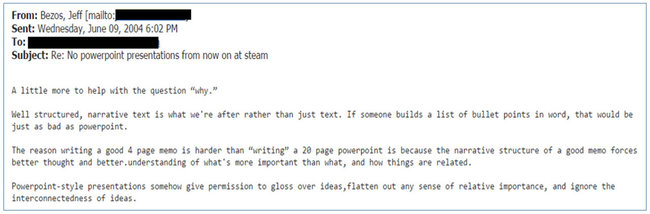
Here’s an email from 2004 where Bezos talks about how much he can’t stand Powerpoint:

Narrative structure

A few years ago, Brad Porter, Amazon’s VP of Robotics, quoted Bezos on this:

“The traditional kind of corporate meeting starts with a presentation. Somebody gets up in front of the room and presents with a PowerPoint presentation, some type of slide show. In our view you get very little information, you get bullet points. This is easy for the presenter, but difficult for the audience. And so instead, all of our meetings are structured around a six-page narrative memo … If you have a traditional PPT presentation, executives interrupt. If you read the whole six-page memo, on page 2 you have a question but on page 4 that question is answered.”

https://www.anecdote.com/2018/05/amazons-six-page-narrative-structure/

On Easter Vacation last year I came across “Working Backwards” by Colin Bryar and Bill Carr, both former Amazon execs.

As someone who worships at the alter of operational excellence I was super into the idea of eliminating Powerpoint for a more efficient method, and wanted an excuse to implement the idea.

Bryar and Carr explain in the book that powerpoint lacks nuance, but narrative documents are portable and scalable. They allow for nonlinear and interconnected arguments. They’re better for decision making, you’re able to write while anticipating objection, you can connect the dots for the reader, and a narrative is more interactive.

Amazon meetings allegedly start with 20 minutes of silence while everyone reads, and then they can get down to brass tacks. Every narrative doesn’t have to be 6 pages, but they cannot be more than 6 pages. And your ability to craft a narrative can be a make or break for your success at the company. You are ultimately writing 1 page for every 10 minutes of a meeting/presentation.

A few months ago when I was speaking with a mentor he was encouraging me to make a walking deck, to prepare all senior and executive leadership for my 2022 vision by presenting a powerpoint of what I was thinking for the year ahead. It hit me after we hung up, that there was no way that I could present to every single person I needed to, and that my little neurodivergent brain would get exhausted with my own road show. So this year I figured was the perfect time to try my hand at the Amazon memo technique.

I’m proud to say that after 6 pages, size 10.5 font I was able to express some ambitious goals and strategic priorities in that document. And as a writer, I found it to be a more fulfilling exercise, it took the mental load off from presenting, and it’s allowed me to have some really in depth convos with internal stakeholders once it was sent around.

Now I won’t be sharing my document, but I did find another blogger, who not only explains the 6-pager but also shares his own 6-pager from his time at Amazon. You can find it HERE. Seriously, hit that link if you want to try your hand at a new technique for presentations and meetings.

I don’t think I’ll be able to eliminate powerpoint forever, but when it comes to presenting more strategic initiatives I can’t wait to dive into more Amazon memos.

Now if you’ve made it this far and you neither want to read a book or a blog post, enjoy some YouTube videos…

Show Your Work

As most hot and interesting singles do on a Saturday night, I was sitting on my couch watching productivity YouTube videos and came across a great video from one of my favorite YouTubers Ali Abdaal.

How Writing Online Made Me A Millionaire

I always love a book recommendation from people I admire, so I ordered Show Your Work! by Austin Kleon immediately. Not only was this a quick read, but it was the kick in the ass that I needed.

If you look through this blog you’ll see that I dipped my toe, during grad school, into the blogging space. I tried to talk fashion, lifestyle, food, all the things, but balancing a full time MBA program and work didn’t prove to be conducive to blogging. BUT, and this is a big but, I started to lose interest in writing about those things.

Yes, I enjoyed them as a topic, but I was less style blogger and more fascinated by people like Tim Ferris, Ryan Holiday, Ultralearners like Scott Young, memory champions like Nelson Dellis and Yanjaa Wintersoul, and unlimited mindset coaches like Jim Kwik. I would wistfully read their content, listen to them on podcasts, and then immediately think “I wish I could do what they do.” I would talk my mom’s ear off about how there were no Black women in the space that I knew of, and that when I was smarter, better, faster, and whatever other BS I would try my hand at sharing my personal ultralearning challenges, stoic journey, etc.

Those ANTs (automatic negative thoughts as Jim Kwik calls them) started having less of a hold on me when I came across Ali’s YouTube channel, because here was a doctor who was making the time to chase the things he wanted (like starting a business and learning to play the guitar), in addition to practicing medicine.

What does all of this have to do with me blogging/writing again…well that’s where Austin Kleon comes in.

Kleon talks in his book about making the commitment to learn in public. “…whatever the nature of your work, there is an art to what you do, and there are people who would be interested in that art, if only you presented it…” Rather than wait until I’m perfect or an expert to share, I’m willing to share my amateur attempts. Even Ed Catmull, my favorite imaginary mentor, talks about the benefits of approaching everything with a beginners mind. I want to share my writing not as a self-promotional attempt, but a self-discovery vehicle. As GaryVee says “document, don’t create.” I want to document my passion for productivity, pushing the limits of my cognitive ability, personal development, tech, and even love of storytelling and style.

Tim Ferris says it best, “waiting for someday will take your dreams to the grave,” and I realized I’ll never have a perfect resume to share my passions and projects. Also, to be a little self serving, teaching someone else will help drill the information, quotes, whatever into my brain better than holding it to myself. Even the stoics challenge us to stop putting off till tomorrow what we can do today, how much longer will we wait?

In some capacity, at the minimum, I will show my work weekly. I want to show the things I’m working on, and that includes:

Gaining fluidity in French so I can read French classics in their original language

Moving from #25 to the Top 15 of US Memory Athletes

Reading 100 books in a year (a goal I’m about to hit in 2021, so 2022 may be 101)

Learning Dutch and Italian, in pursuit of becoming a polyglot

Transitioning from long board to a short board in surfing

Regaining fluidity in Spanish

Organizing my home in a way that supports my neurodivergence

Teaching myself graphic design

Defining my style uniform, creating a wardrobe that lowers decision fatigue, and learning about the fashion industry

Becoming a media and entertainment futurist

…and probably a thousand more projects and topics, because my intellectual curiosity knows no bounds!

I look forward to showing my work, curating content that catches my attention, what I’ve learned, and what I’m noodling on at any given point, even if it’s for three people.

Now if you’ve stuck around until the end, here are some additional Ali Abdaal videos and Austin Kleon videos that I think you’ll like.